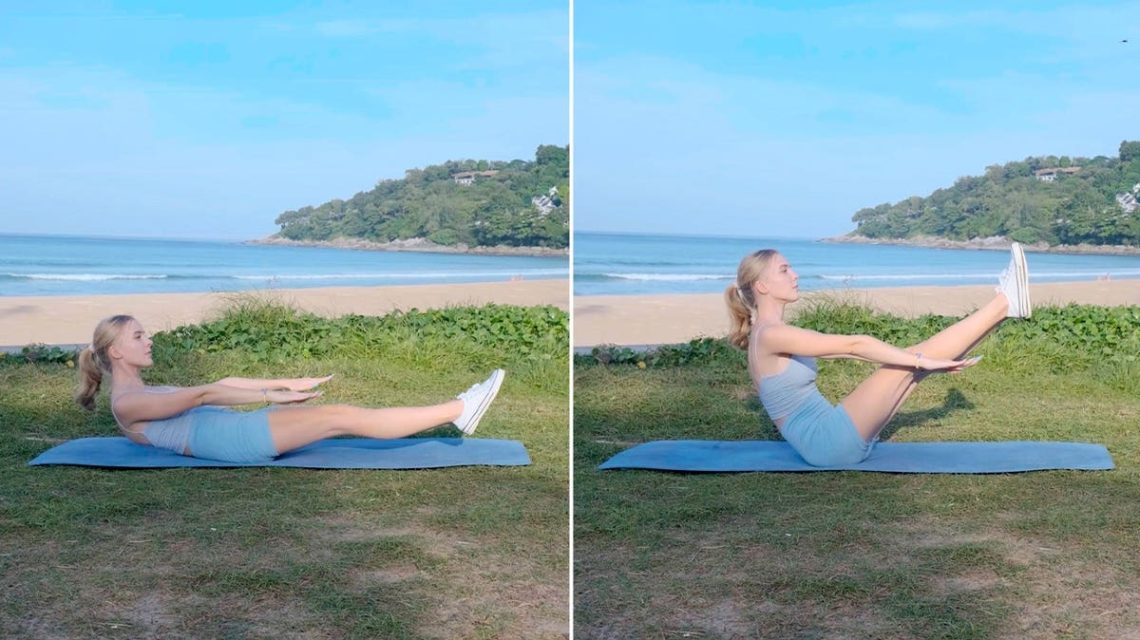
Strengthening the core enhances balance and stability, boosting movement and physical performance. Experts highlight that while traditional abdominal exercises are effective, certain yoga poses may offer additional benefits. One such pose is the Boat pose, known as Navasana, which forms the body into a ‘V’ shape and challenges multiple core stability muscles.
Core Strength and Everyday Movement
Melissa Leach, a certified yoga instructor and strength and conditioning coach based in Philadelphia, emphasizes the importance of a strong core for both exercise and daily activities. According to her, ab exercises support key muscles like the obliques, lower back, and deep stabilizers such as the transverse abdominis. These muscles work together to stabilize the spine, creating a strong foundation for movement and enabling efficient force transfer between the upper and lower body.
A strong core also helps reduce the risk of lower back pain by improving spinal stability and providing control during physically demanding movements. However, while core strength contributes to reducing injury risk, it isn’t the sole determinant.
The Advantages of Boat Pose
Leach describes how the Boat pose engages the ab muscles, along with the hip flexors, glutes, and back, building functional core strength. Compared to a traditional sit-up, which operates in a single motion plane, the Boat pose requires the entire core to work cohesively to maintain balance and lift. This puts greater demands on core stability and control.
The pose develops both stability and muscular endurance. Holding or moving dynamically within the pose trains muscles that stabilize the spine and pelvis.
Steps to Perform Boat Pose
Leach provides steps for performing the Boat pose safely. Ensure proper form by sitting on a mat or the floor with bent knees and flat feet. Lean back slightly, lifting the feet off the ground while keeping the shins parallel with the floor. Extend the legs upward if possible, reaching the arms forward parallel to the ground. Engage the core muscles to balance.
For those who want a dynamic exercise experience, moving in and out of the pose adds variation. Lie flat on your back, using core muscles to lift the legs and upper body into the final ‘V’ shape. Return to the floor and repeat.
Modifications for Beginners
Beginners might consider modifications. Keeping legs bent in a half boat pose reduces core strain. Holding the back of thighs aids support and balance. Sitting on a folded blanket or cushion can help tilt the pelvis forward. Alternatively, sitting a few inches from the wall offers reassurance without interference during movement.
For seniors or individuals with limited core strength, Leach suggests a chair-supported variant. Sit toward the chair’s front edge, holding its sides and leaning back slightly while lifting the feet slightly off the floor. This fosters the same engagement without the challenge of balancing unsupported.
Angelica Stabile reports for Fox News Digital on lifestyle topics.
 Early Detection of Atherosclerosis and Heart Disease Prevention
  Former Stripper Finds Hope and Redemption Through Faith
  Church Attendance Linked to Increased Sexual Satisfaction for Married Couples
  Dining with Loved Ones May Benefit Blood Sugar Levels
  Urgent Need for Action in East Africa’s Food Crisis
  Facing Terminal Illness: Embracing Life’s Moments