
The U.S. Secretary of Defense, Pete Hegseth, assured Pacific allies of America’s ongoing commitment to the region. Speaking at the Shangri-La defense conference in Singapore, Hegseth stated that the Pacific holds significant importance for U.S. security and prosperity. He emphasized that Washington’s priority is achieving a lasting and favorable balance of power in the Pacific.
This marked Hegseth’s second address to the forum, a gathering organized by the International Institute for Strategic Studies. Last year, he stirred Beijing’s anger by highlighting Chinese threats, especially its aggressive stance towards Taiwan, noting that China was not only strengthening its military capabilities to take Taiwan but actively training for it daily.
This year’s conference occurred two weeks after U.S. President Donald Trump’s visit to Chinese President Xi Jinping in Beijing. Trump praised Xi as a ‘great leader’ and foresaw a ‘fantastic future’ together. Hegseth, who accompanied Trump, mentioned that both leaders agreed on maintaining a constructive strategic stability relationship based on equality and reciprocity, protecting their respective interests while working towards practical, mutually beneficial agreements.
However, he maintained that the U.S. priority remains ensuring that China does not dominate the Indo-Pacific region. Hegseth noted a justified alarm over China’s historic military power increase and its regional military expansion. He expressed a shared assessment that a Pacific dominated by any single power would disrupt regional balance and undermine stability.
Hours later, Chinese Major General Meng Xiangqing praised Hegseth’s comments on the Xi-Trump meeting, asserting that the consensus would guide China-U.S. relations for years. He emphasized Xi’s vision of strategic stability focusing on cooperation with competition managed reasonably and differences controlled.
Senator Tammy Duckworth criticized Trump’s administration for getting too close to China. She expressed concerns about distractions from other global conflicts affecting U.S. commitments in the Indo-Pacific and suggested the president might be aligning with policies favorable to Beijing. Following Xi and Trump’s meetings, Trump cast doubts on Washington’s readiness to defend Taiwan, viewing a new $14 billion arms sales package as a ‘good bargaining chip’ with China.
China claims Taiwan as its territory, with Xi not ruling out forceful acquisition. The U.S. is legally bound to provide Taiwan defensive means, adhering to a policy of strategic ambiguity regarding military intervention if China assaults the island. Hegseth reaffirmed the U.S. stance on Taiwan’s status, noting no change but declined to comment on the arms agreement.
Hegseth highlighted the U.S. insistence on allies increasing defense spending, emphasizing the need for partners, not protectorates. He praised several Asian nations for their efforts while criticizing unnamed European allies for being distracted by globalist rhetoric about a rules-based international order. Hegseth suggested that western Europe might benefit from Asia’s approach to partnerships, marked by pragmatic adjustments without drama or moralization.
Australia’s Defense Minister Richard Marles, commended by Hegseth for increased military spending, remarked that while an international order based on rules is imperfect, the task is renewal, not dismantlement. Marles noted that abiding by rules grants smaller states agency, and when rules bow to power, sovereignty shifts to the powerful.
In an event outside the conference, Hegseth, Marles, and U.K. Defense Secretary John Healey announced a new initiative within their AUKUS partnership, primarily focused on developing and constructing nuclear-powered submarines. They committed to investing in advanced underwater drone capabilities. Healey stated these enhancements would help detect threats, including those affecting underwater cables and pipelines.
 Incident on FlyDubai Flight Raises Security Concerns
 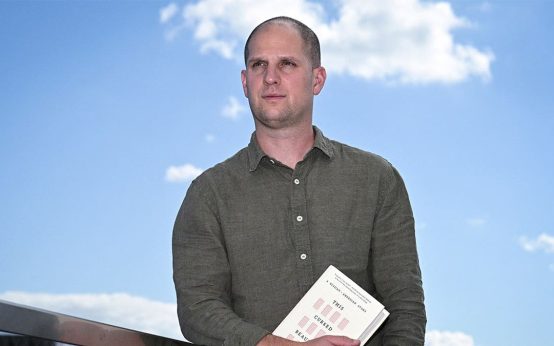 Journalist Gershkovich Discusses Wrongful Detention and Release in Russian Prisoner Swap
  Pakistan Airstrikes in Afghanistan: Civilian Casualties Reported
 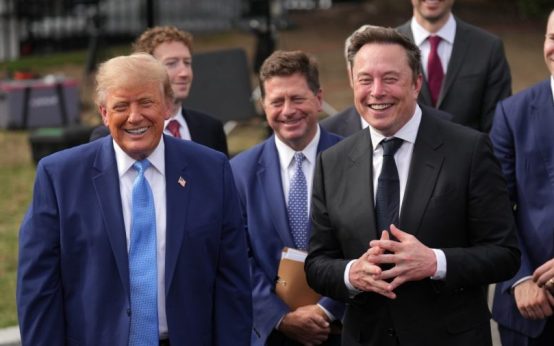 Trump’s 2024 Reelection and Evolving Voter Dynamics
  Defense Secretary Emerges as Key Player in the Trump Administration
 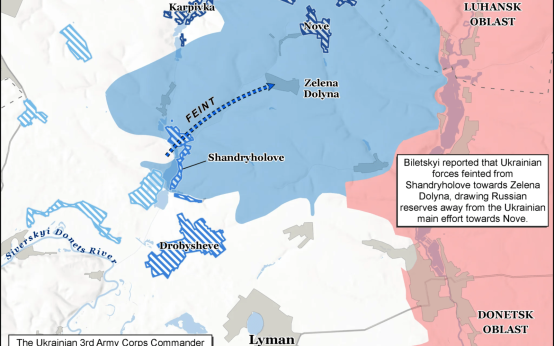 Ukraine Converts APCs to Explosive Devices in Donetsk Offensive