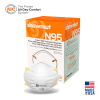
N95 respirators offer the highest level of protection among face masks. The Centers for Disease Control and Prevention (CDC) confirms this, noting that they filter out at least 95% of both small and large airborne particles. The snug design minimizes gaps around the face.
N95s come under the regulation of the National Institute for Occupational Safety and Health (NIOSH) in the U.S. This regulation makes it easier to shop for them compared to international equivalents like KN95s and KF94s. In medical terms, respirators like these are designed with certified filtration capabilities.
How to Choose N95 Masks
N95 masks vary, and choosing the right one can be crucial. Here are some key factors to consider:
- NIOSH Approval: Ensure the mask is listed on NIOSH’s certified equipment list. Dr. Stella Hines states that approval indicates the respirator meets specific testing standards.
- Markings: Genuine N95 masks have indicative markings including filter designations and model numbers.
- Features: The mask should have two headstraps and an adjustable nose bridge for a secure fit. Avoid masks with exhaust ports.
- Shape: Choose from cup, flat fold, and duckbill shapes based on personal comfort.
- Type: Surgical or medical N95s are for healthcare workers. Standard N95s serve the general public well.
Examples of recommended N95s include 3M’s Aura, which features a low-profile, three-panel design, and Shawmut’s N95s, which include an anti-fog foam piece. Honeywell’s flat-fold design and DemeTech’s five-layer structure are also noteworthy.
Proper Wearing of N95 Masks
For effective protection, the mask must cover your mouth and nose fully without gaps. Dr. Hines points out that a proper seal ensures that all inhaled air passes through the mask’s filter material.
Ensure a good fit by performing a leak test. Breathe out to check for air leakage under your chin or around your eyes.
Consider using a mask fitter or brace, particularly if you have facial hair that may affect the seal.
Situations for Mask Use
While there is no federal mask mandate, masks have uses in specific scenarios:
- In crowded indoor spaces for extended periods, such as concerts or transportation hubs, wearing a mask can reduce illness transmission.
- When feeling unwell, wearing a mask prevents spreading illnesses.
- If you are at higher risk due to age or medical conditions, consider using masks.
- In communities with high illness rates, wearing a mask provides additional safety.
Frequently Asked Questions
Formal fit testing is not required for the public, but you should check the fit each time you wear an N95. Masks should be stored properly between uses and replaced if they’re damaged, wet, or contaminated.
N95 respirators are typically not meant for children, although some smaller models may fit older children. Choose well-fitting masks to avoid children removing them or wearing them incorrectly.
N95 masks are reimbursable through programs like FSA and HSA but not through dependent care flexible spending accounts.
Expert Input
Consulted experts included Dr. David Rempel, Dr. Stella Hines, Dr. Carl Fichtenbaum, and Dr. Sharon Nachman. Expertise provided insight into mask use and selection based on standards and practices.
 Understanding Inflammation: Myths and Facts
  Calm Parenting: Strategies to Manage Stress
  Trump’s Executive Order to Combat Mosquitoes and Ticks in D.C.
  Overcoming Weight Loss Challenges: Brain Health and GLP-1 Medications
  Supporting Children’s Mental Health at Home: Practical Steps for Parents
  Abdul El-Sayed’s Strategy to Attract Health-Conscious Voters in Michigan