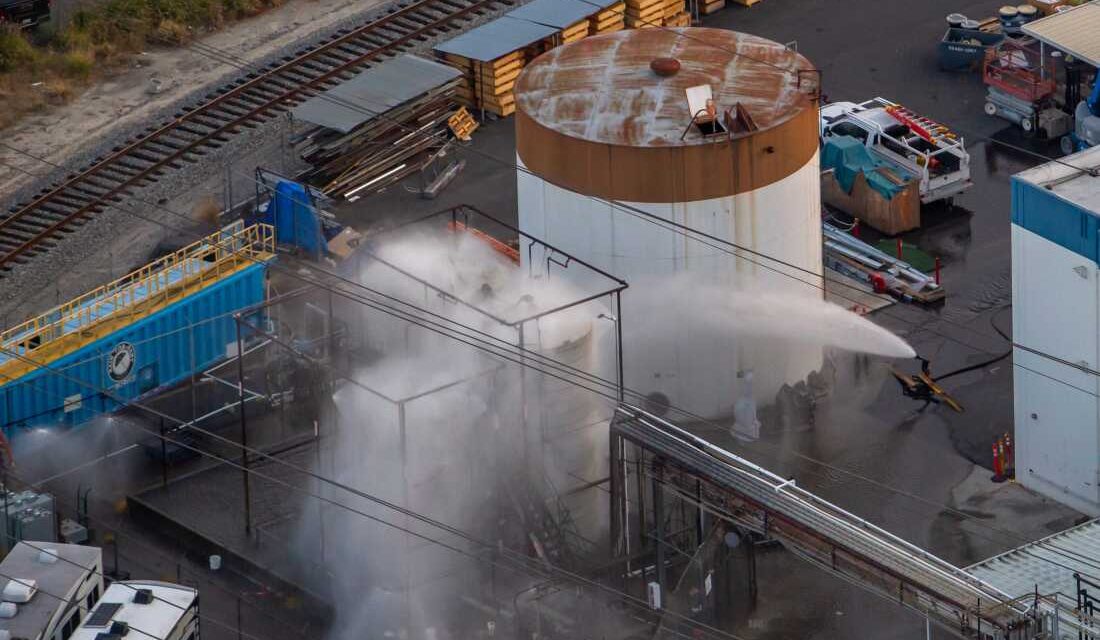
An aerial view taken on May 23, 2026, shows water being sprayed onto an overheated 34,000-gallon tank at GKN Aerospace in Garden Grove, California. The malfunctioning tank poses a risk of chemical leak or explosion, prompting swift action from emergency teams. Photo by Apu Gomes/Getty Images.
Around 50,000 residents in Garden Grove, California, remain under evacuation orders as experts work to manage a potentially explosive situation at an aerospace plant. The tank at the facility holds about 7,000 gallons of methyl methacrylate, a highly toxic and flammable chemical.
Tank Crack May Offer a Silver Lining
Firefighters and emergency personnel have been monitoring the situation since Thursday when the chemical tank began overheating. Interim County Fire Chief TJ McGovern stated that a visual inspection revealed a potential crack in the tank, which could avert a more dangerous explosion scenario.
The past experience from a 2009 incident in the UK highlights the severity of such occurrences. A tank containing the same chemical exploded, demolishing the factory and damaging surrounding structures. Fortunately, no fatalities occurred, though the destruction extended 600 feet from the site.
If the tank cracks and leaks the chemical slowly, it might mitigate the danger of a sudden explosion. Incident Commander Craig Covey explained that while a leak is undesirable, it would be preferable to an internal build-up of pressure leading to an explosion.
Health and Environmental Hazards
The risks involved with methyl methacrylate are significant. Contact can result in skin and eye irritation as well as respiratory issues and neurological symptoms. Longer exposure could lead to severe lung and organ damage.
While exact environmental impacts are not well-documented, the potential effects of a spill are considered negative. In anticipation, barriers have been created to contain the chemical, with efforts led by Orange County Fire to prevent the substance from reaching storm drains and waterways.
Ongoing Evacuation Efforts
Residents remain evacuated to safeguard against potential explosions and hazardous fumes. Fire Chief McGovern acknowledged the inconvenience for residents but emphasized the necessity of the evacuation until safety is confirmed.
No fumes have been detected so far, thanks to monitoring by the Environmental Protection Agency. The discovery of the tank crack provides a measure of optimism as it could relieve internal pressure, signaling a positive step towards resolution.
 U.S. Initiates Military Operation on Southern Border
  TikTok Couple Arrested for Alleged Arson in West Virginia
  21-Year-Old University of Georgia Student Survives Eight-Story Fall
  Texas Authorities Arrest Suspect Over Potential Capitol Attack
  Arizona State University Hockey Incident Leads to Coach’s Administrative Leave
  Senate Vote on Data Center Electricity Cost Legislation