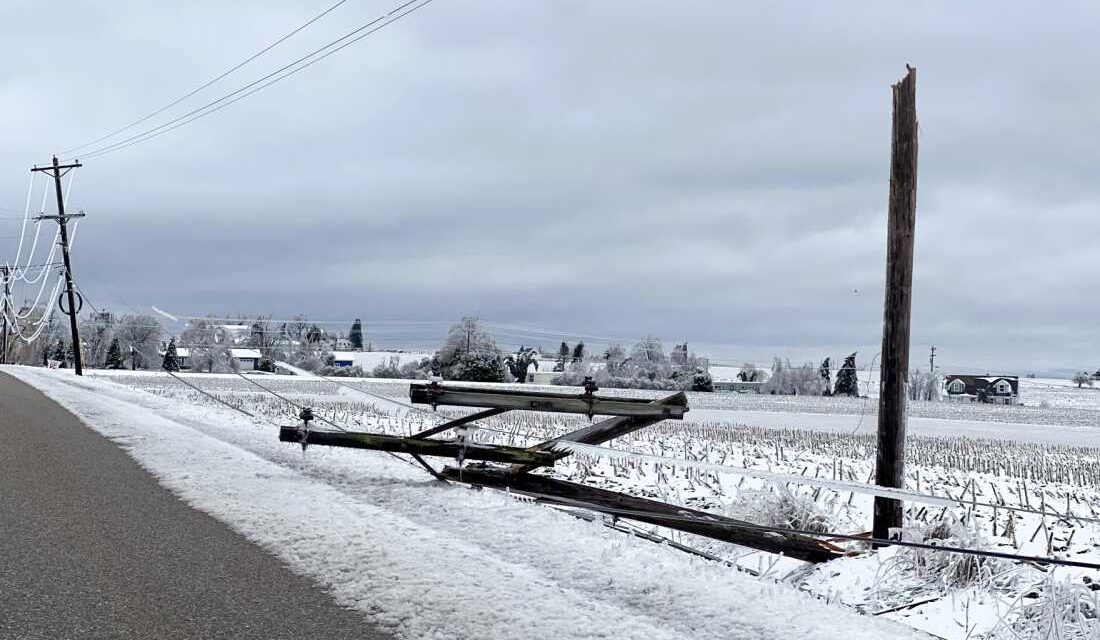
In March 2025, northern Michigan was struck by a significant ice storm, leading to extensive damage as trees and power lines were knocked down. This event caused widespread power outages, affecting thousands. The region may face more freezing rain in the future due to climate change, potentially resulting in more destructive ice storms. Research indicates a warming climate could exacerbate these conditions.
Infrastructure across the United States faces challenges from changing climate conditions. Power outages, often caused by trees falling on overhead lines, number in the hundreds yearly. Burying power lines underground can enhance reliability, aiding in mitigating outages during severe weather. Currently, only around 20% of the country’s power lines are buried, according to a U.S. Department of Energy report. In response to the 2025 ice storm, some utilities in northern Michigan have committed to burying future lines underground.
During the storm, Lewiston resident Wanda Whiting faced a critical situation. Her husband, Dave, needed to get to a hospital during the blackout due to heart trouble. Navigating roads cluttered with debris from the storm proved perilous. Wanda recounted the darkness encountered due to the absence of street lights. Despite the hazardous conditions, they managed to reach medical help, although power in the area remained out for two weeks.
Wanda Whiting shared, “I still can’t get over how astonished I was, how much we rely on street lights.”
The storm highlighted the vulnerability of the power grid in Michigan during extreme weather. The state already experiences lengthy outages, which could worsen with evolving climate patterns. Communities must adapt, planning for a future marked by more severe weather, says Richard B. Rood, a climate adaptation expert from the University of Michigan.
Joshua Garza, spokesperson for Michigan’s largest electric cooperative, mentioned the shift towards burying new lines underground. Electric poles and wires were notably affected during the storm. Burying lines proves more reliable but poses cost challenges. A report from the Michigan Public Service Commission indicates burial costs range dramatically. Constructing underground lines during new developments can reduce expenses when combined with other utilities.
Utilities face a choice in balancing costs and benefits. Shari Culver of Great Lakes Energy states that the cooperative aims to prevent outages over the long term by burying new lines. However, relocating existing lines is costly, involving labor and materials. Tony Chartrand from Traverse City Light & Power notes buried lines can bring challenges, necessitating sidewalk excavation for maintenance. Nevertheless, the strategy offers reliability advantages.
The financial aspect poses significant hurdles. Undergrounding is beneficial, but high costs can lead to increased electricity bills. Tao Sun from Stanford University stresses the importance of planning and community buy-in before raising rates. Attention needs to shift towards proactive measures rather than reactive responses following disasters.
In response to severe weather, California’s utility PG&E has embarked on the largest undergrounding project in the country following devastating wildfires. Meanwhile, Michigan residents continue their recovery from the ice storm a year later. Wanda Whiting ponders the resilience of current power infrastructure and advocates for underground solutions.
Wanda Whiting remarked, “If it means going underground, then by God, go underground!”
 Atlantic Ends September Without a Hurricane for First Time Since 1994
  Bobcat Sightings and Conservation Efforts in Illinois
  2026 El Niño: A Historical Comparison and Future Projections
  U.S. Records Warmest September in History
  Swiss Glaciers Show Effects of Ice Loss Amid Global Warming
  Climate-Resistant Rock Glaciers: Hidden Water Resources