Every morning, shikaras, graceful wooden boats, glide across Dal Lake against the backdrop of the Himalayan mountains. Yet, Dal Lake, renowned throughout South Asia, is grappling with significant environmental challenges. Rising pollution levels from local infrastructure, invasive plants threatening biodiversity, and decreased water levels partly caused by climate change pose risks to the lake’s future and other lakes in Kashmir.
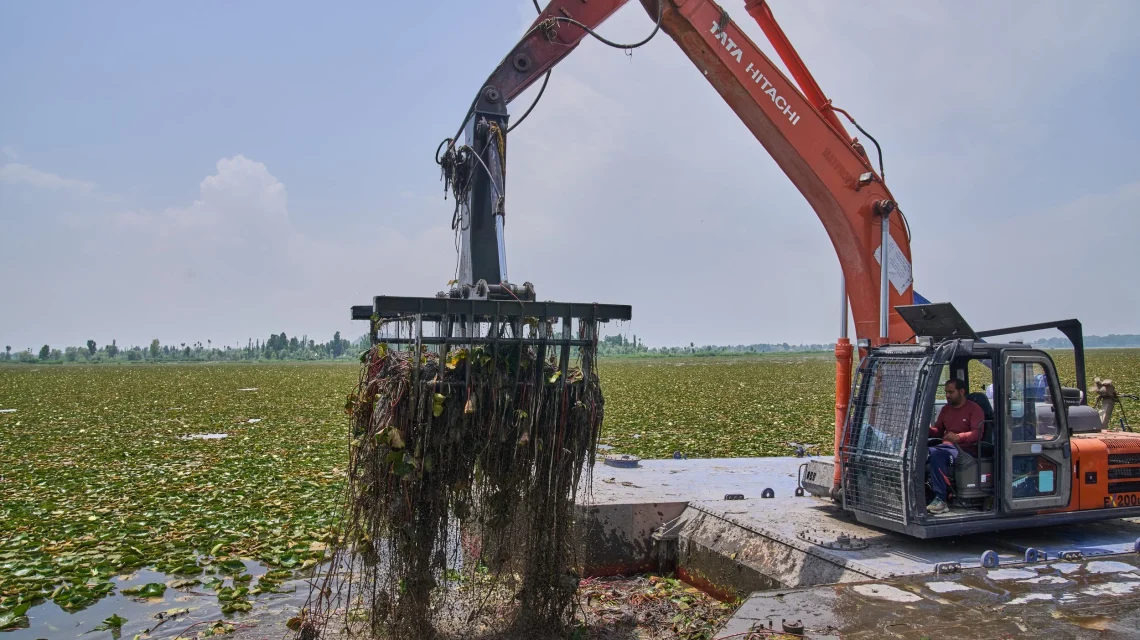
Efforts to maintain Dal Lake involve constant weed removal by government workers. They wear gloves to protect against skin irritation from polluted waters. Srinagar, Kashmir’s largest city, benefits from regular restoration activities, unlike many other lakes in the region.
Ghulam Rasool, a worker from the Lake Conservation and Management Authority, operates weed-clearing machinery and highlights the difficulty of keeping the lake clean. Sewage flows directly into the lake, compounded by waste from mountain streams that carry garbage.
Climate change, combined with urban growth, has transformed or polluted nearly half of the lakes in Jammu and Kashmir over the past six decades. An Indian government report identified that out of 697 natural lakes, 315 have vanished, and 203 have shrunk since 1967. Many have turned into marshes, wetlands, or farmland.
The lakes historically served as activity hubs, like Dal Lake’s floating markets offering a range of goods. However, lake boundaries have contracted due to unpredictable rainfall, sediment accumulation from rivers, and encroachment by farms and homes. Illegal constructions are increasingly common.
Farmland replaces lake areas, where cattle graze as fishers strive to meet quotas. Untreated sewage promotes weed growth fed by waste nutrients, and plastics litter the waters.
Workers regularly clear weeds using machinery, forming piles across Dal Lake.
Despite efforts, additional funds and work are needed according to local officials. The lake authority founded in 1997 comprises engineers, scientists, forest officials, and police. Sewage from unconnected homes remains a primary pollution source, per Muzamil Ahmad Rafiqui, the authority’s superintending engineer.
Climate change worsens the situation, with warming increasing faster than globally in the Himalayan region. Changes in snowmelt and rainfall patterns affect water supplies feeding rivers and lakes, said Sher Muhammad from the International Centre for Integrated Mountain Development. Glacier melting initially boosts water flow but diminishes natural storage vital during dry months.
Environmental scientist Irfan Rashid noted the negative impact on Kashmir’s economy, affecting hydropower, tourism, and agriculture.
Fishing communities bear the impact, with Wular Lake becoming shallower, its waters obstructed by new vegetation patches. Abdul Rasheed, a fisherman at Wular Lake, summarized the changes: his earnings plummeting from 1,000 to 100-200 rupees for a night’s catch.
Further encroachment from agriculture and residences harms water quality, creating gunk-laden surfaces. The last study on Wular Lake in 2007 by Wetlands International found a 45% shrinkage over a century.
Bashir Ahmed, another veteran fisherman, fears future generations will not sustain livelihoods from fishing due to diminishing fish stocks.
 The Threat of Melting Glaciers: A Call to Action
 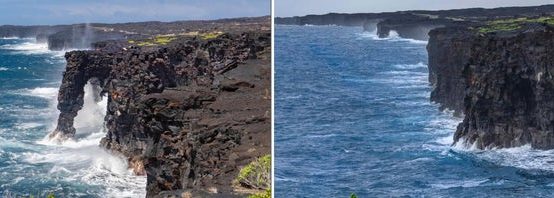 Collapse of Hawai’i’s Hōlei Sea Arch Amidst Storms
  Los Angeles Faces Uncommon Heatwave in October
  Drought Drives Black Bears Closer to Human Activity
  Atlantic Ends September Without a Hurricane for First Time Since 1994
 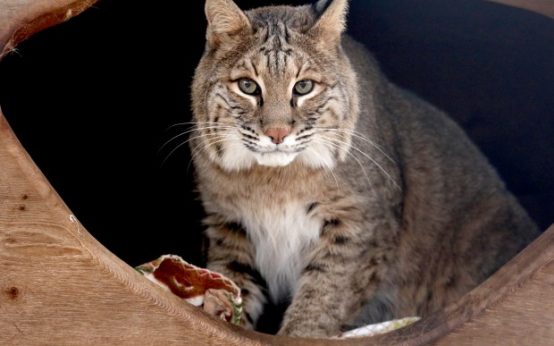 Bobcat Sightings and Conservation Efforts in Illinois