Germany faces significant challenges both politically and economically. Chancellor Friedrich Merz struggles with low approval ratings a year into his tenure. The coalition government he leads is unpopular, causing political instability. Meanwhile, the far-right Alternative for Germany gains popularity, inching closer to power. The situation aggravates as the United States, under a Trump-like demeanor, announces troop withdrawal from Germany. This decision jeopardizes a crucial geopolitical relationship.
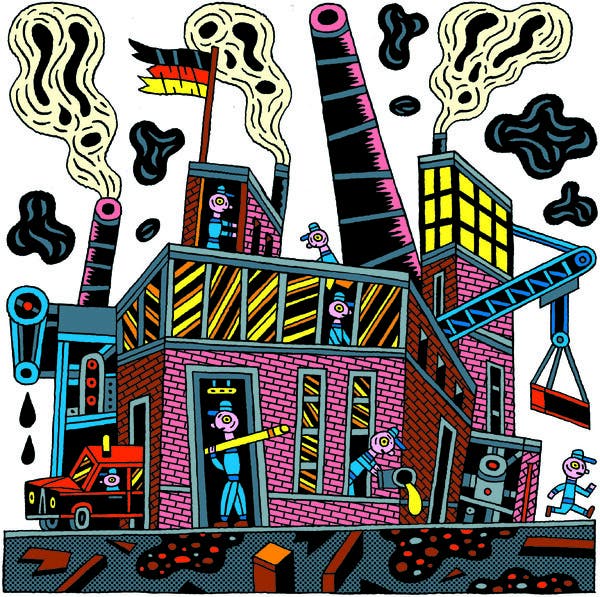
Germany’s economic predicament is even more alarming. Although Germany was once synonymous with efficiency and stability, it has suffered a persistent recession for three years. Major companies like Commerzbank, established in 1870, are laying off thousands. The dire situation is underscored by Die Zeit’s feature series, “Where Germany Still Works.” The underlying issue is the erosion of an economy that played a central role in shaping postwar Germany’s identity. It could restore resilience to German businesses, even if it doesn’t change the country’s current political direction or mend relations with the U.S.
Current economic struggles should be viewed within a larger historical context. At its economic peak, Germany thrived with high taxes, high wages, and a large bureaucracy. During postwar growth, Germany’s economy functioned like a well-made machine, merging key elements seamlessly. These included an educational system producing skilled workers, managers with engineering or scientific expertise, banks focusing on long-term goals, and secure labor relations. This created the technological edge recognizable in the Made-in-Germany label.
However, when the American economy surged ahead in the 1990s, driven by Wall Street’s financial power and Silicon Valley’s entrepreneurship, Germany’s approach faltered. In seeking renewal, the economy opened up to foreign investment. Banks and insurers reduced their stakes in German firms, and executives pursued international investment. Chancellor Gerhard Schröder’s government attempted to regain competitiveness by reforming labor markets, removing certain worker protections. These changes mark Germany’s ongoing struggle to adapt in a rapidly evolving global economy.
 New Jersey Voter Fraud Prompts Renewed Push for SAVE Act
  Concerns Over Changes to Voter-Registration Form for Americans Abroad
  Trump’s 2024 Campaign Targets Young Men Through Cryptocurrency
  Trump’s White House Visitor Center Proposal Gains Bipartisan Support
  State Department Simplifies Passport Process with Online Applications
  Becerra and Hilton Clash in California Gubernatorial Debate