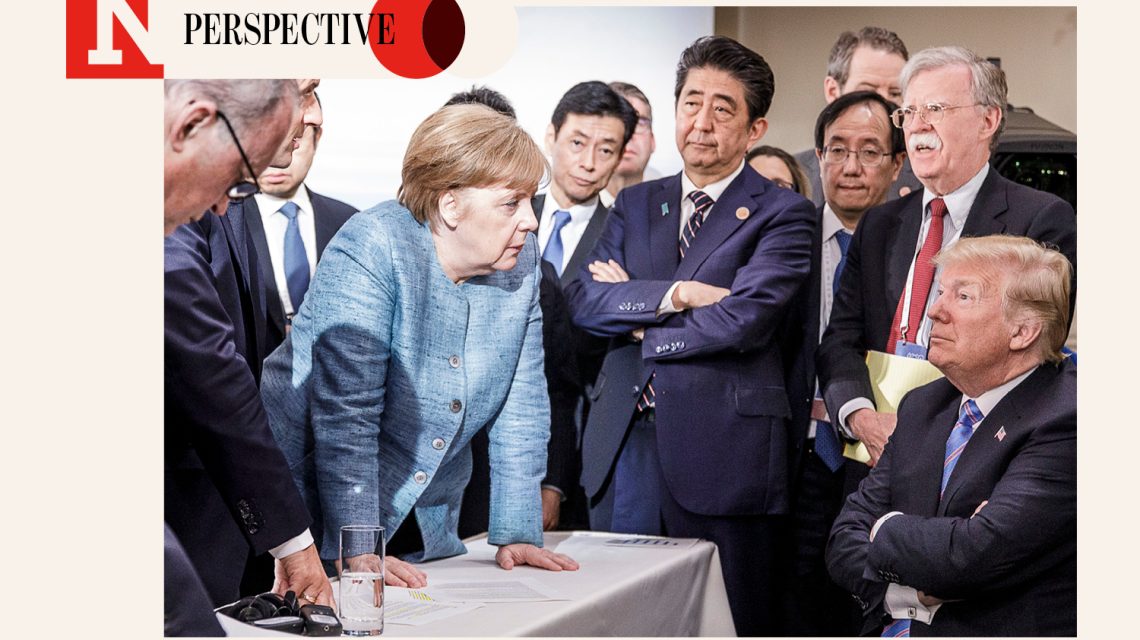
The iconic photograph from June 9, 2018, capturing the tense dynamics of Trump-era diplomacy at Charlevoix, Quebec, became emblematic of the challenges faced by global leaders. German Chancellor Angela Merkel was seen leaning over the table, French President Emmanuel Macron’s knuckles pressed into the wood, Japanese President Shinzo Abe with folded arms, and U.S. National Security Adviser John Bolton looming behind. President Donald Trump, however, sat with arms crossed and chin tilted, seemingly indifferent to the leaders’ combined exasperation.
This image resonated globally, speaking volumes beyond official statements. The leaders of the world’s wealthiest democracies were striving to maintain an American president within the system America had built. Despite the summit producing a communiqué pledging cooperation on key issues, Trump later refused to endorse the joint statement, reflecting the disconnect.
Calling the episode “sobering and a bit depressing,” Merkel highlighted the earlier strategy of confronting Trump, hoping alliance pressure would influence him. Eight years later, at Évian-les-Bains, France, a different conclusion emerged. You cannot persuade a president who doesn’t believe in the foundational principles, prompting an expansion of the summit’s scope.
France hosted the 2026 summit from June 15 to 17, featuring alpine scenery and democratic grandeur. The focus, however, was the guest list. Alongside the core G7 members, additional nations like India, Brazil, South Korea, Kenya, Egypt, Qatar, Ukraine, and the United Arab Emirates participated. Institutions like the World Bank and IMF also joined, marking a shift towards a post-American G7 framework.
The intent was clear: The traditional approach had evolved, reflecting demographic and economic changes. The G7’s representation has gone from commanding 28.4% of global GDP to seeking broader geopolitical alliances.
Macron’s engagement with diverse nations, including China and Kenya, highlighted the club’s acknowledgment of global challenges. The G7’s economic and military prowess remains formidable, yet the strategic inclusion of new participants underscores the evolving nature of global diplomacy.
Qatar: The Gas Valve Insurance Policy
Qatar’s significance lies in its energy influence rather than democratic credentials. Projected at $217 billion nominal GDP and $358 billion in purchasing-power terms in 2026, Qatar is crucial for global LNG exports, accounting for 18.8% in 2024. Its participation aims to mediate energy markets amid shifting U.S. policies.
The UAE: Oil and Money Insurance Policy
Ranking above Qatar, the UAE is a key player in both hydrocarbons and finance. With a projected $622 billion nominal GDP in 2026, it stands as a vital energy producer, holding significant sway in global oil markets. These contributions make the UAE indispensable to the economic balance.
Egypt: The Canal Keeper Insurance Policy
Egypt, with its population of 116.5 million in 2024, plays a strategic role primarily because of the Suez Canal, handling 12 to 15% of global trade. Its inclusion is essential for maintaining supply chains amid geopolitical uncertainties.
Kenya: African Legitimacy Insurance Policy
Kenya is valued for its African legitimacy and connections. Hosting key UN offices and rich in critical minerals, Kenya bridges the gap between rich and developing nations, providing environmental and economic credibility.
Ukraine: Moral Collateral Insurance Policy
Ukraine’s significance at the summit is rooted in its symbolic stance against aggression, despite modest economic projections. Financially tied to the G7, Ukraine’s presence is essential for ensuring democratic credibility amidst global conflict.
South Korea: Silicon and Shipyards Insurance Policy
South Korea is essential due to its technological and industrial capacity. With a projected $1.93 trillion nominal GDP in 2026, the nation plays a crucial role in semiconductor production and shipbuilding, reinforcing supply chain resilience.
Brazil: BRICS and Breadbasket Insurance Policy
Brazil’s role in the summit reflects its ability to balance global alliances and maintain agricultural market influence. As part of BRICS, its nonaligned stance offers diplomatic leverage in the evolving world order.
India: Swing State Superpower Insurance Policy
India is deemed the most crucial participant for its demographic and economic scale, projected at $4.15 trillion nominal GDP in 2026. As a habitual G7 invitee, India’s blend of democratic and economic strengths positions it as a pivotal player in shaping global dynamics.
The Charlevoix photograph marked the end of an era of persuasive diplomacy. Évian is the pragmatic sequel, characterized by strategic inclusions aimed at reducing reliance on American leadership. Canada’s Prime Minister Mark Carney aptly remarked the necessity for middle powers to act together, ensuring representation at the table, rather than becoming sidelined.
 State Department Simplifies Passport Process with Online Applications
 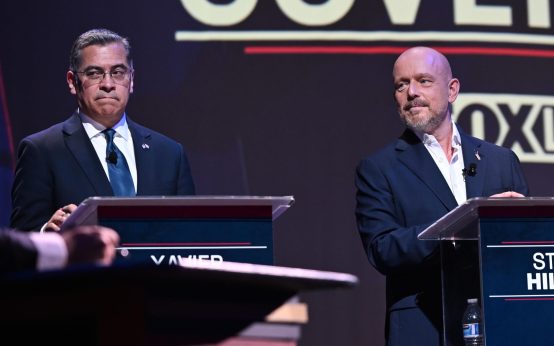 Becerra and Hilton Clash in California Gubernatorial Debate
  California Voters to Decide on $7.5 Billion State Research Fund
 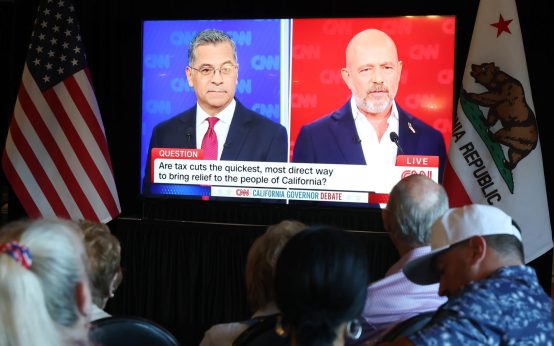 Highlights from the California Gubernatorial Debate: Becerra vs. Hilton
 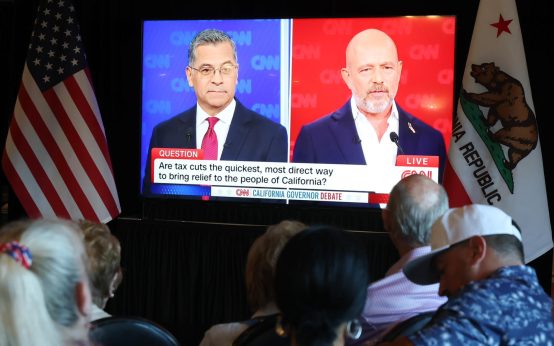 Becerra vs. Hilton: The Debate and Key Issues in the California Governor Race
  Senate Confirms New Labor Secretary