
The U.S. Supreme Court might soon face another decision on redistricting. A federal court in Alabama has temporarily halted the Republican Party’s attempts to redraw the state’s congressional map.
This redistricting conflict involves lawyers for Black voters challenging a plan that could enable a Republican to capture a seat currently held by a Democrat in the upcoming midterms. Such efforts mirror nationwide moves supported by former President Donald Trump.
A three-judge panel issued a preliminary injunction on Tuesday. However, the state may choose to challenge this decision at the U.S. Supreme Court, which has previously handled similar cases, including one in Texas.
Alabama Redistricting Injunction: Key Points
The court mandated that Alabama use the same districts ordered by the court for the 2024 elections. This decision aligns with arguments from attorneys representing Black voters, who claimed the new map intentionally discriminated against them.
In a similar case in 2023, the panel had already ruled against Alabama’s plans. The case originated in 2021, alleging that the state’s map violated Section 2 of the Voting Rights Act by concentrating most Black voters into a single district, thus failing to create a second district where they could choose their candidate.
Federal courts have consistently agreed with the plaintiffs. In 2022, a panel found the challenge likely to succeed, ordering Alabama to create a second majority-Black district. The U.S. Supreme Court upheld this order in a significant 2023 decision (Allen v. Milligan), affirming the protections against racial vote dilution provided by the Voting Rights Act.
Despite this, Alabama’s legislature produced a revised map in 2023 that still featured only one majority-Black district, leading to further legal action. A federal court once more blocked the map, implementing a court-drawn version with two Black opportunity districts for the 2024 elections. In 2025, after a comprehensive trial, the court further ruled that the state’s map showed intentional racial discrimination under the Constitution.
This brings the case to its present stage before the 2026 midterms. On May 11, 2026, the Supreme Court became involved again. This time they did not rule based on the merits. Instead, they annulled the lower court’s 2025 decision and remanded the case for reconsideration, considering a separate precedent, Louisiana v. Callais, that reinterpreted Section 2 of the Voting Rights Act.
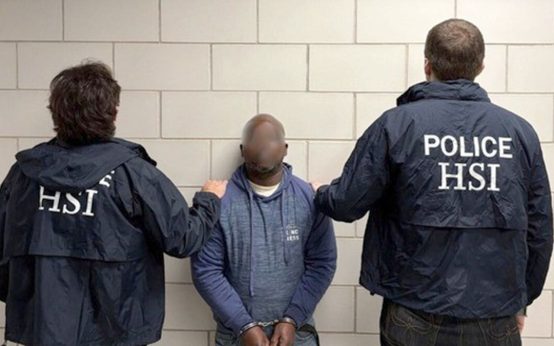 New Jersey Voter Fraud Prompts Renewed Push for SAVE Act
  Concerns Over Changes to Voter-Registration Form for Americans Abroad
  Trump’s 2024 Campaign Targets Young Men Through Cryptocurrency
  Trump’s White House Visitor Center Proposal Gains Bipartisan Support
  State Department Simplifies Passport Process with Online Applications
 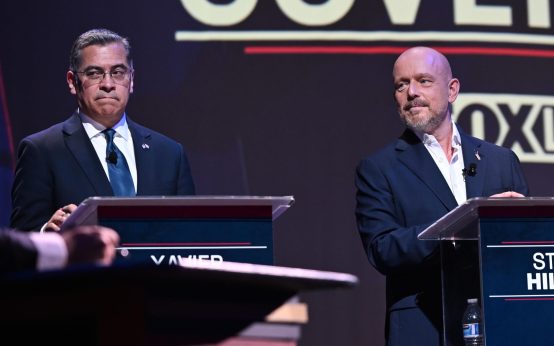 Becerra and Hilton Clash in California Gubernatorial Debate