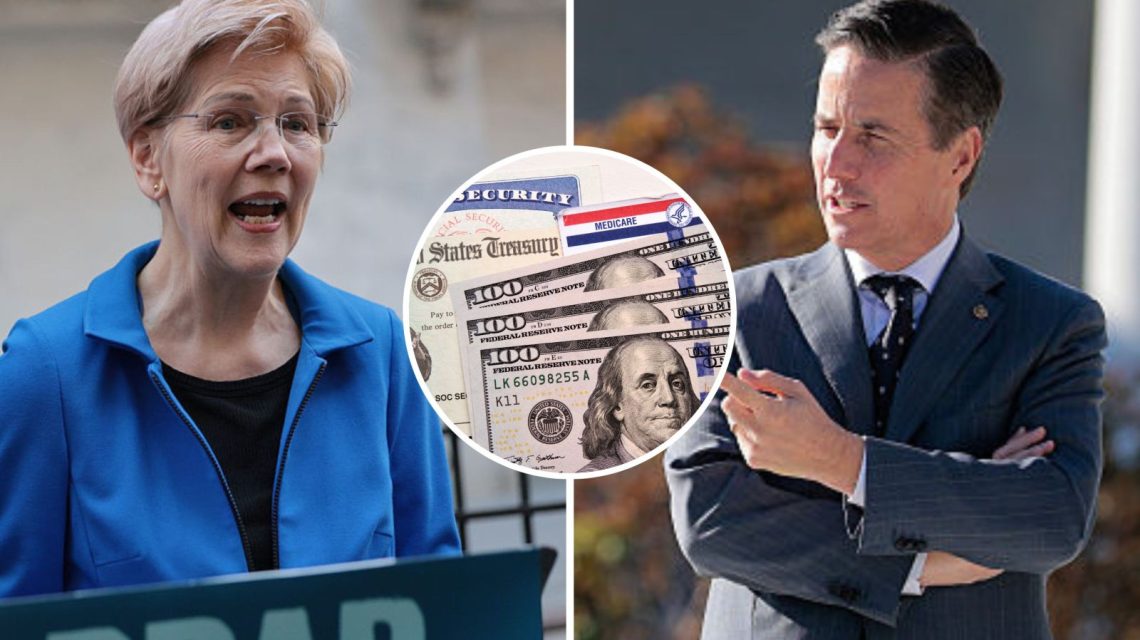
Senators Elizabeth Warren, a Massachusetts Democrat, and Bernie Moreno, an Ohio Republican, have called on Congress to promptly stabilize Social Security. In an opinion piece for The New York Times, they proposed a bipartisan plan aimed at securing the program for future generations.
The central proposal involves removing the cap on income subject to Social Security payroll taxes. They argue that instead of cutting benefits, bipartisan efforts should focus on protecting them, rewarding work, and promoting fairness. “Lifting the payroll tax cap is a common-sense solution,” Warren and Moreno stated.
Social Security provides benefits to millions of Americans and serves as a key component of retirement security. However, its financial condition has deteriorated in recent years. According to the latest trustees report, the main trust fund may face significant depletion by late 2032, potentially leading to more than a 20 percent reduction in benefits.
Proposed Changes to Social Security Taxes
Currently, Social Security taxes in 2026 apply to wages up to $184,500, with both workers and employers contributing 6.2 percent. Income above this cap is not taxed, resulting in higher earners contributing a smaller proportion of their income.
The senators suggested eliminating this cap, subjecting all earnings to the payroll tax. They questioned the fairness of a middle-class worker contributing a larger share of their paycheck compared to higher earners. The proposed change aims to increase revenue and extend Social Security’s solvency.
Most Americans pay Social Security taxes on all their earnings, yet higher earners do not. This proposal intends to address that imbalance.
Potential Debate and Impact
The proposal is anticipated to generate debate in Congress, where opinions differ on how to resolve Social Security’s long-term funding challenges. Raising the payroll tax cap is seen as a simple revenue-increasing step without reducing benefits. Critics warn, however, that this would raise taxes on higher earners and may not fully address funding gaps alone.
Financial literacy instructor Alex Beene noted that while the proposal could bring in trillions of dollars, it would also increase taxes on high-income workers and businesses. By itself, it may not completely solve the shortfall.
Implications for Retirees
For retirees, immediate action is crucial. Without intervention, benefits might decrease by over 20 percent after 2032. This proposal would ensure higher earners contribute more, preserving benefits. Yet, implementing major changes will require legislation, taking years to finalize.
Drew Powers of Powers Financial Group emphasized that more funds are needed to save Social Security, stating that discussions have delayed progress. Yet, he acknowledged the proposal’s tax increase on income above $184,500, often met with resistance.
Next Steps
Warren and Moreno are working on legislation to realize their proposal, though specifics are yet to be disclosed. Changes to Social Security need congressional approval, which can be challenging given political sensitivities.
Beene stated that the bipartisan initiative offers more credibility, but passing the proposal remains difficult with resistance to payroll tax hikes at any income level. As the trust fund’s depletion date looms, bipartisan efforts are critical.
 Trump’s 2024 Reelection and Evolving Voter Dynamics
  Defense Secretary Emerges as Key Player in the Trump Administration
  Hegseth’s Vision for the Military: Balancing Tradition and Innovation
  Significant Funding Boosts Ken Paxton’s Texas Senate Campaign Amid Tight Race
  U.S. States Extend Gas Tax Waivers Amid Rising Fuel Costs Due to Iran Conflict
  USCIS Raises Immigration Fees